Fox behaviours

My twins can operate every button in our Kia Sportage. Seat heat, ambient lighting, Spotify, switching mid-song, every song. They don't even press things, they just talk to it like it's staff. The other morning one of them leaned forward and said, very politely, "Hello Kia, play Eminem," and the car did it instantly, full volume, no questions asked. I've asked it to call my mum three times and it acts like I'm speaking Latin.
They cannot drive the car.
Part 1 told you what collapsed. Part 2 argued that humans and AI are better together, and that the value has moved from execution to judgment. Both of those are true, and neither of them tells you what to actually do differently on a Tuesday morning when you have a brief to write and fifteen meetings before lunch.
That's what this part is for. Not a philosophy. A set of behaviours.
The marketers who are thriving right now aren't the most technically fluent. They're not the ones with the longest prompt libraries or the most subscriptions running in the background. They have something harder to copy, a set of habits that make them better at the judgment parts of the job, which are the parts AI is genuinely bad at.
Five behaviours. They're not new. I wrote about these in my first book. But they matter more now, and they work differently now, and if you're not building them deliberately, the tools will erode them for you.
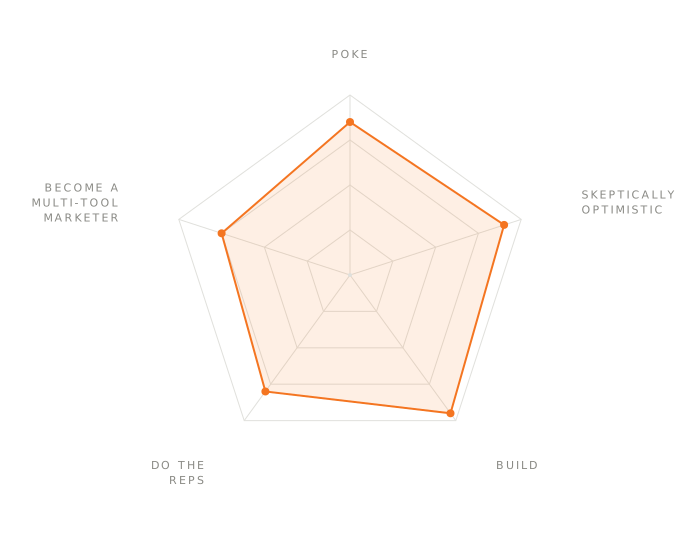
Poke. Curiosity treated as a system, not a personality trait. The habit of pressing on the odd thing, following the thread nobody asked you to follow, staying interested past the first plausible answer. This is how foxes find the thing the brief didn't know to ask for.
Skeptically optimistic. AI produces confident output. Confident output feels finished. Finished output doesn't get questioned. This is the habit of asking where something came from before you build a plan on top of it. Not cynical. Skeptical.
Do the reps. Judgment is built from doing the work, not from reading about it. If you stop doing the reps, competence drains out of your fingers. AI makes this worse because it hands you a result that feels like you earned it. You need to earn it separately.
Build. The habit of making real things instead of describing real things. A page you can click is worth twenty slides about a page. The tools have made this available to marketers in a way it never was before.
Become a multi-tool marketer. Not a generalist in the old sense, the person who coordinates but can't make anything. A marketer who can do enough adjacent things to ship without depending on a chain of other people. This is what you become if you do the first four for long enough.
They're not a ladder. Most days you're running all five at once, or ignoring three of them and feeling it later. The spider chart is a way to see where you're strong and where you're coasting. The chapters that follow go into each one.