What's a good cold email reply rate?
Published averages range from under 0.5% to over 3%, depending on who's counting and how. Here are the two biggest 2025 studies, why they differ by seven times, and how to judge your own numbers.
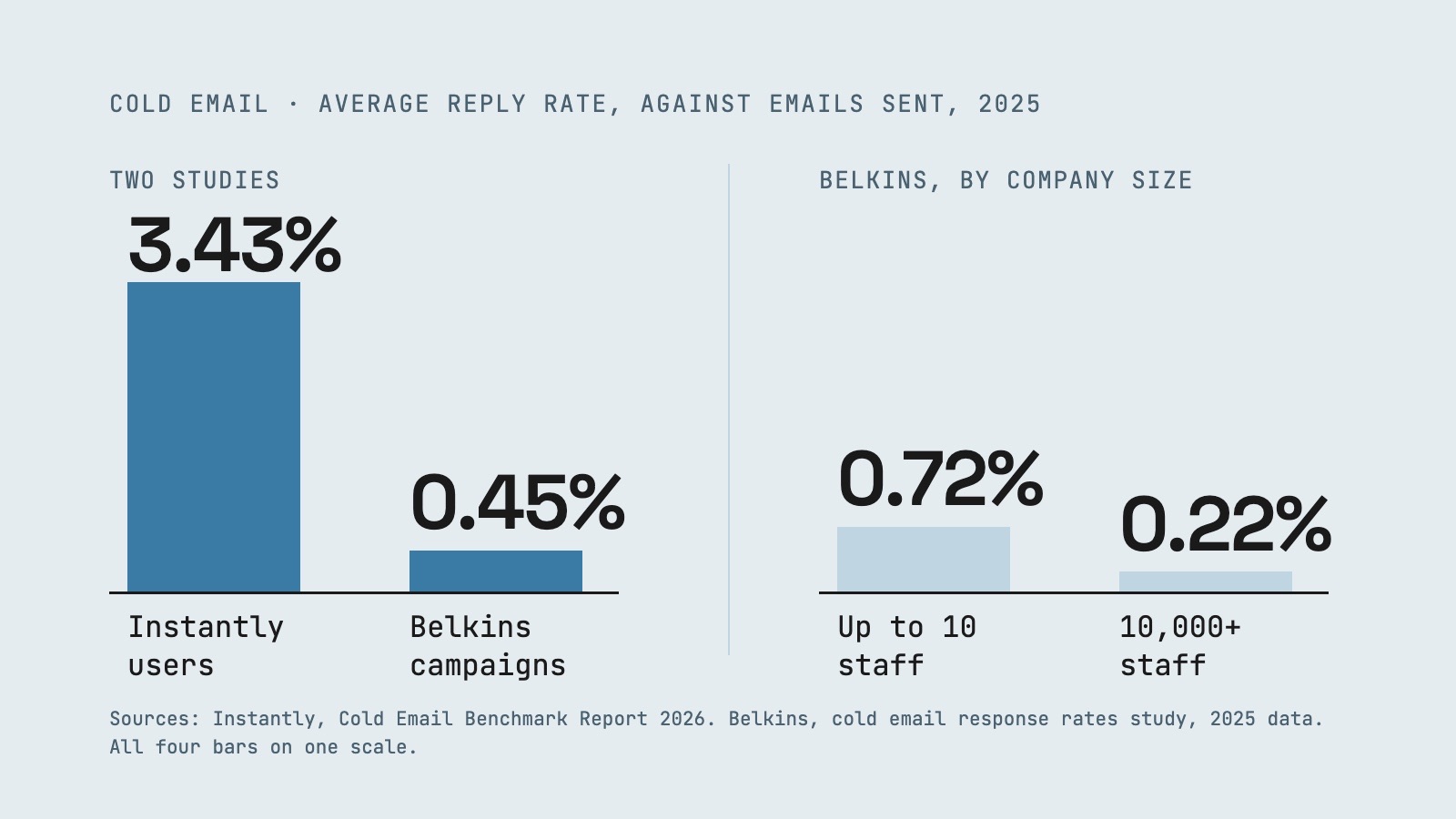
It depends on who's measuring, and the published figures differ a lot. The largest agency study of 2025, from Belkins, found an average reply rate of 0.45% across 7.5 million B2B cold emails. The largest software platform study, from Instantly, found an average of 3.43%, with the top tenth of senders above 10.7%. Both count replies against emails sent. They differ because they measure very different senders. For genuinely cold B2B outreach to new people, the lower figure is the more realistic one to plan around.
The two big studies
Belkins is a B2B lead generation agency. Its 2025 study covered 7,530,489 emails and 34,393 replies, and found "The average reply rate across all 2025 campaigns was 0.45%." It counts reply rate as "unique replies ÷ emails sent, excluding auto-replies and bounce notifications." It's a picture of an agency doing outreach to new prospects on behalf of clients.
Instantly sells cold email software. Its 2026 benchmark report covers January to December 2025 across "billions of cold email interactions across thousands of active workspaces," and says "The overall average reply rate is 3.43% with top-performers of users exceeding 10% reply rates." Its top quarter of senders got 5.5% or more. It counts all replies, including replies to follow-ups, against total emails sent, and its users include people emailing small, warm or well-targeted lists.
So neither number is wrong. They're measuring different kinds of sending.
Watch how the rate is calculated
Older studies often divided replies by the number of people who opened the email, which makes the rate look much higher. Belkins changed its method this year and says so directly: "A 5% reply rate against openers and a 0.45% reply rate against total sends can describe the same campaign." Before you compare yourself with any benchmark, check which way it was counted. Open tracking has also become unreliable since Apple's privacy changes, which is another reason to count against sends.
What makes a difference
Belkins' 2025 data shows some clear patterns. Smaller companies reply more: firms with up to 10 employees replied at 0.72%, and firms with 10,000 or more at 0.22%. Founders and owners replied at 0.57%, C-level at 0.42% and VPs at 0.32%. By country, Ireland came in at 0.74%, above the US at 0.51% and the UK at 0.48%. February was the best month at 0.54%, and December the worst at 0.35%.
Instantly found "58% of all replies are generated from step one", so the first email does most of the work, but follow-ups still bring in the rest.
How to judge your own numbers
This part is our advice.
Count replies against emails sent, leave out auto-replies, and track positive replies separately. A reply saying "remove me" isn't a result.
Compare against the right benchmark. Truly cold outreach to new B2B contacts should be judged against figures like Belkins'. Emails to people who know you, or to a small hand-picked list, should do much better.
Look at meetings, not just replies. Belkins booked "over 1,200 appointments" from its 7.5 million emails. That's the number that pays the bills, and it tells you how many emails a meeting really takes.
Keep lists small and targeted, and write to one person about one thing. Most of the difference between average and top senders comes from who they send to and how relevant the email is.
And check the rules before you send. In Ireland and across the EU, emailing business contacts is governed by data protection and electronic marketing law, which is stricter than in the US. Get proper advice on what you can send and to whom.
Read next: How much do LinkedIn ads cost?, Marketing budget as a percentage of revenue and What is mental availability?.
This note was drafted with AI and checked by Paul Dervan before it was published.
Sources
Belkins, cold email response rates study, updated 26 June 2026, covering January to December 2025: belkins.io. Instantly, Cold Email Benchmark Report 2026, updated 12 January 2026: instantly.ai. Both are companies that sell cold email services or software.