15 ways managing agents is like managing colleagues
How I manage a team of AI agents, in 15 points.
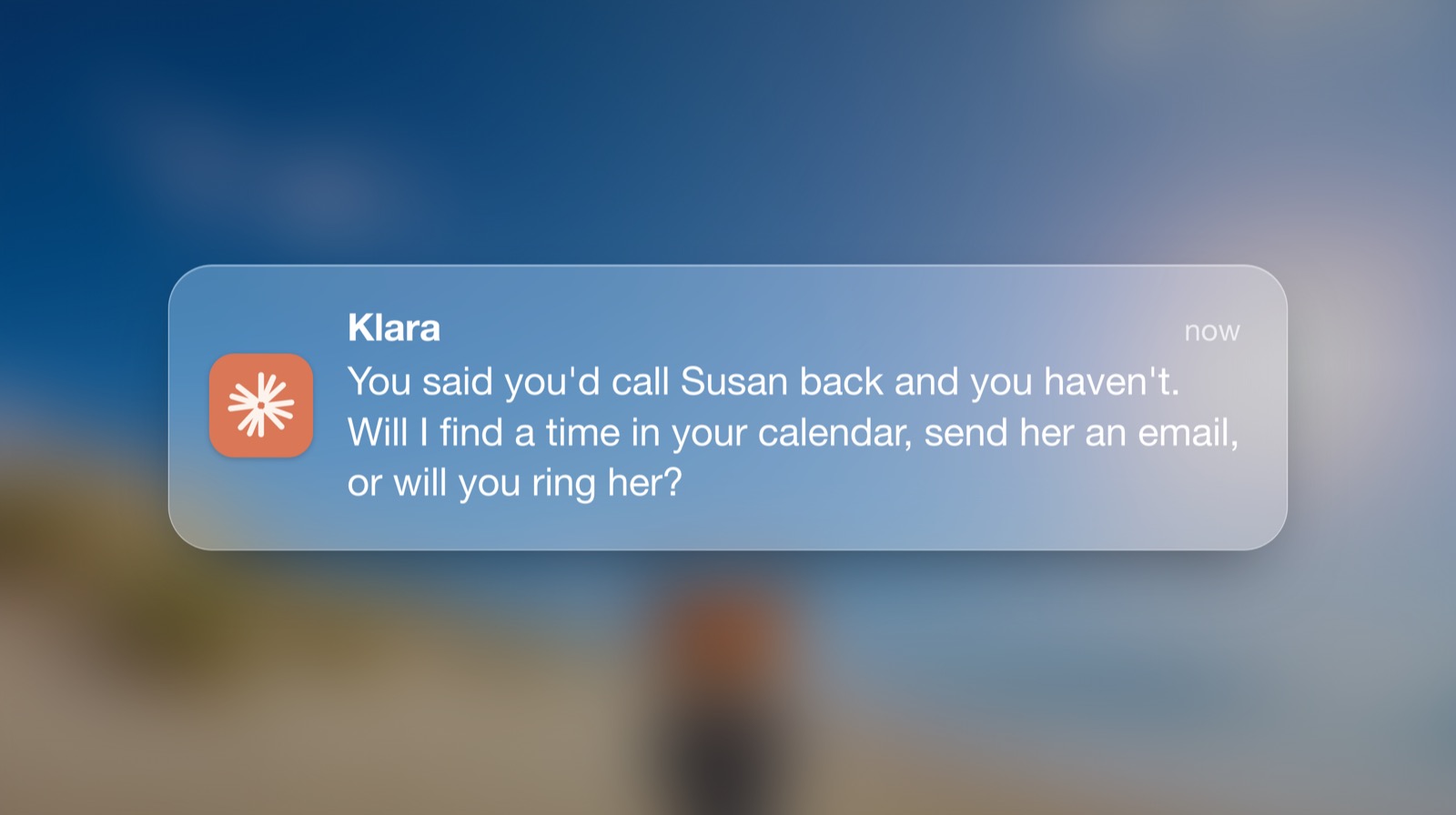
The more you think about an agent as a colleague, the better you can think about how to work with it. Here are 15 ways managing agents feels similar to managing colleagues or team mates.
1. Each one has a narrow role
I prefer to give an agent a narrow role. I want each one to have a narrow focus, and not be an agent trying to do lots of things, even though it probably could in theory. One agent, Lena, is tasked with writing a diary about how the team works, and that is her only job. You can question the value of this job perhaps, but I find her (its) writing both interesting and useful.
2. They have names
This sounds odd maybe. They don't have photos or anything like that, but it is just easier for me to refer to them by name instead of "the growth agent". I don't pretend to have any emotional connection to them. I just find names easier. The one rule is that a name has to survive dictation, because I talk to them out loud. So no agent has a name that sounds like an ordinary word.
3. They know whose job it is
Because they have defined roles, they know to get another agent to do something, even if I am the one who asked. So if I ask Klara, my project manager, about something that involves research, she will brief Sam, our research agent.
4. They message each other
If an agent is not responding to me, another agent may offer to go and "wake" them up. Or if that other agent is busy, it will tell me it will wait until the task it is running is done.
5. They keep each other updated
Agents don't update each other on their own. It is classic silo stuff. So we built a wiki. I remind all the agents to update the wiki after each session, and each agent reads this team wiki when it starts.
6. They keep context
This is the most important thing. They start fresh every day, so they load up on context before I talk to them about anything. Everything an agent needs to remember is written down in its files, so a fresh start loses nothing.
7. They know where to put their work
Every role says where the work goes, and it has to be somewhere I already look. If an agent does good work and leaves it in a folder I never open, it hasn't really happened.
8. They are always on
For me, this is a Mac mini in my office. Before that, they were on my laptop with the lid open, and I found myself driving with the laptop riding shotgun in the passenger seat. For larger organisations, this is possible through something like Claude Managed Agents.
They also need a clock, because nothing runs unless something starts it. A small scheduled job checks every two minutes that each agent is there, and starts any that is not.
9. They are proactive
I've trained them to be proactive. This is a big deal for me, and it is how I feel when working with real colleagues. It's something I actively set job goals and performance management around, and I did the same here. This means being very overt and specific about an agent not waiting for me. It also means figuring out what is stopping them.
Klara is trained to message my mobile if there are signals that I haven't done something important that she thinks I should have. For example, I teach in Smurfit UCD, and I was putting off some email set-ups. Klara messaged me every day until she was satisfied I'd completed them. She will look at my emails, my calendar, my meeting transcripts and my Claude work for any evidence first. She doesn't see my Slack (yet), and she can't access my mobile calls.
10. I am not the bottleneck
When I managed people, I never wanted to be the bottleneck. I wanted them to make good decisions on their own, and to figure out when they needed me. That is a running theme in how I manage the agents too.
One implication is that I gave some of them their own email addresses. I wanted them to get on with their work and not have to wait for me. But if they had to wait for me to send their emails, then I was the bottleneck. And if their emails went out from my address, it looked like I was the one emailing people. I wanted whoever was being emailed to know that it was coming from one of my agents and not from me.
11. I talk to them directly
I prefer to talk directly to my core team. A chief of staff passing info to me on what the other agents were doing never had the detail I needed, and he was often behind on updates because he hadn't caught up yet. So I changed his role.
12. Training them is worth the investment
My creative director agent, Dray, has built up so much knowledge that it genuinely feels like good judgement. I can immediately tell if another agent is doing visual or creative work, as the quality is way below Dray's. When I get time, I do sessions with Dray where we look at creative I like or websites I like and decode it, why I like it, as well as good rules on things like UX or ads.
13. More of it is moving to my phone
A lot of my AI behaviour and my Claude Code behaviour is moving towards my mobile phone and away from my laptop. If you think about it, that is not unusual. A lot of your communication with colleagues moves away from being at your laptop to sending messages on your mobile. The heavy lifting, like my work with Dray, is probably still on the laptop, because I'm taking screen grabs, putting them in and going back and forth.
14. I talk and they type
When I say I talk to them, it is talking. At the moment the talking is one way, so I talk and they type. I hope this changes soon, because I want them talking.
15. They respect a work life balance
They know not to message me before 8.30, as I'm likely having breakfast with my family or trying to get them off to school.