The five levels of marketing metrics
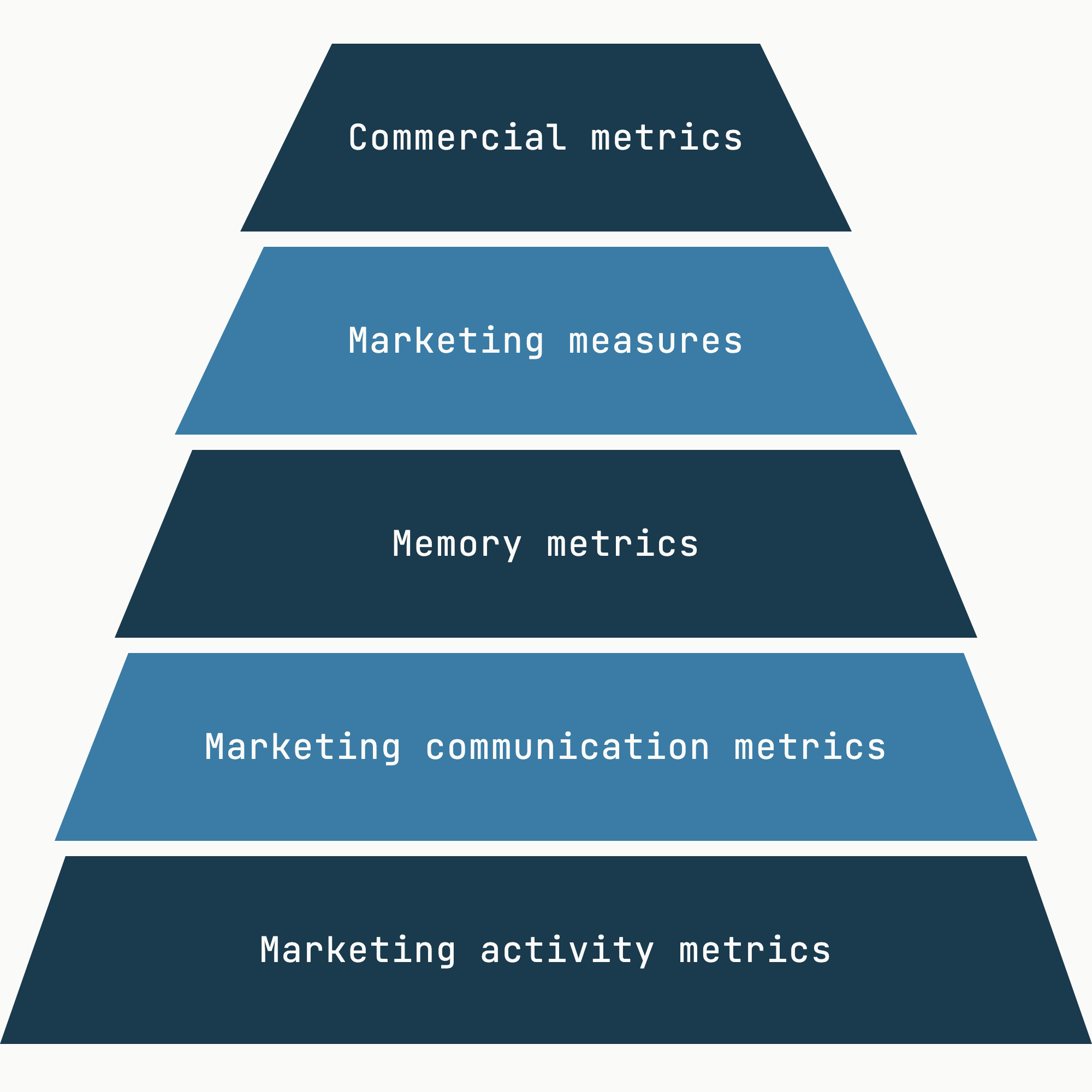
Five levels of marketing metrics, top to bottom, and the ones that are easiest to measure sit at the bottom.
Understanding the fundamentals of marketing matters more than it ever did, because it is now so easy to make stuff. Anyone with AI can write a LinkedIn post every day, or five a day if they want. Output is not impressive any more, and it was never how marketing is measured.
Marketing is measured on five levels, and they are not equal.
At the top are the commercial metrics. Profit, revenue and share price. These are the ones your CEO and CFO care about.
Under that are the marketing measures. These measure what customers do, which mostly means what they buy. Market share, customers acquired, customers lost, churn, how much they spend, basket size, how often they buy, and penetration.
Under those are the memory metrics. How are people thinking about your brand? Are they thinking about it at all? Do you turn up for the right category entry points? Tim Ambler was an accountant, then a very established and renowned marketer, then a professor. I interviewed him for my book a few years ago, and he died only recently. He described brand equity as what people carry in their head about your brand. That is what memory metrics measure. It is the level most smaller brands skip, partly because it costs money to measure. You have to ask people questions about the category and about your brand, and that means research.
Under the memory metrics are the marketing communication metrics. This is the level with lots and lots of metrics, and it is the one to be careful of. ROI, which is the metric most people think of first, sits here. It measures how efficient your marketing is. So do clicks, how many people remember seeing your ad, and how many people arrive at your website. Anything that tries to measure whether your marketing communications are working sits here. They matter, but you have to remember where they sit on the scale. Because they are easier to measure, they get a lot of attention. How many impressions you got, and how well your ads were noticed, is of less interest to the CEO.
At the bottom are the marketing activity metrics. What you are doing in the market, and how many people you are reaching. Reach is important. If you are not reaching people, and especially the people in your category who don't buy from you yet, it is hard for them to get to know your brand, never mind buy it. But if most of your time goes on measuring and reporting the activity, without the levels above it, you can be very busy and still miss the bigger picture.
That is the problem right now. It is so easy to increase output at the bottom level without doing the hard work, which is asking whether these things are working, and whether they are the right things to do at all.
So start with the fundamentals, and understand that not all metrics are equal. Then you can work out what you can do faster. Speed should matter to you. But it only matters if you can keep the quality of the work where it is, or make it better.