How do AI tools like ChatGPT find your website?
Each AI company runs its own bots, and each bot has a different job: building a search index, collecting training data, or fetching a page when a person asks. Here is what each one does, in the companies' own words.
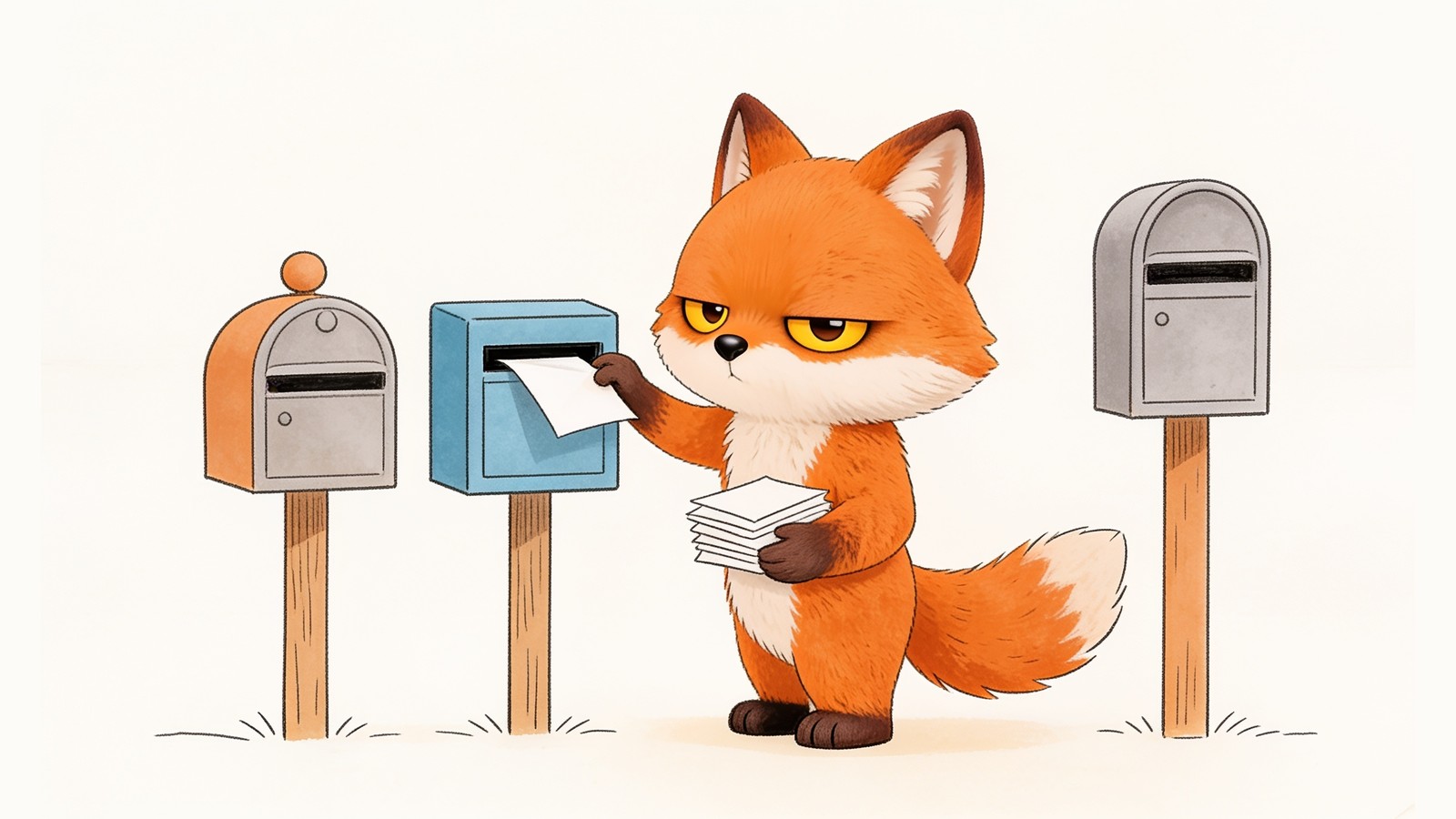
AI tools find your website in three ways. A search bot visits your pages to build an index the tool can look things up in. A training bot collects pages that may be used to train the underlying model. And a user bot fetches one page live when somebody asks a question that needs it. OpenAI and Anthropic each run bots for all three jobs, Perplexity runs a search bot and a user bot and says it doesn't crawl to train foundation models, and all three publish a page describing them, and Google runs Googlebot for Search plus a separate control, Google-Extended, for its Gemini models. OpenAI also says ChatGPT "sometimes partners with other search providers", so for ChatGPT a page that isn't in a normal search index can be harder to find.
OpenAI
OpenAI's crawler page says "OAI-SearchBot is for search" and that it is used to surface websites in ChatGPT's search features. GPTBot is the training bot: it is "used to make our generative AI foundation models more useful and safe," and "Disallowing GPTBot indicates a site's content should not be used in training generative AI foundation models." ChatGPT-User handles certain actions a person starts inside ChatGPT or a custom GPT, and OpenAI says it "is not used for crawling the web in an automatic fashion." Because a person triggered the visit, OpenAI also says "robots.txt rules may not apply" to it.
ChatGPT search also uses other companies. OpenAI's help page says it "sometimes partners with other search providers" and "typically rewrites your query into one or more targeted queries" that it sends to them. So being found by ChatGPT can depend on both OpenAI's own bot and the search index of a partner.
Anthropic
Anthropic describes three bots on its support page. ClaudeBot collects web content that may be used in training. Claude-SearchBot navigates the web to improve the quality of search results for users. Claude-User supports Claude users by visiting a site when someone asks Claude a question, and Anthropic says that "Disabling Claude-User on your site prevents our system from retrieving your content in response to a user query."
Perplexity
Perplexity says "PerplexityBot is designed to surface and link websites in search results on Perplexity" and "is not used to crawl content for AI foundation models." Perplexity-User fetches a page when a person's question calls for one, and Perplexity says that because "a user requested the fetch, this fetcher generally ignores robots.txt rules."
Google's page on its crawlers lists Googlebot among the crawlers used to build its search indexes. Its AI Overviews and AI Mode draw on that same Search system, and Google's guidance says there are "no additional requirements to appear in AI Overviews or AI Mode," though its newer guide, updated 10 July 2026, says a site "must be included in Search generative AI features in Search Console" to be eligible. Google-Extended is a separate robots.txt token that controls whether crawled content is used for Gemini training and grounding, and Google states that it "does not impact a site's inclusion in Google Search."
Can they read your pages?
Googlebot runs JavaScript. Google's documentation says that once resources allow, "a headless Chromium renders the page and executes the JavaScript." The other bots are less clear. Vercel, which sells website hosting, wrote in December 2024 that "none of the major AI crawlers currently render JavaScript," based on recent traffic across its network. The same post names two exceptions: Gemini gets "full JavaScript rendering" because it uses Googlebot, and "AppleBot renders JavaScript through a browser-based crawler." That is one hosting company's observation from 2024, and the bots may have changed since, so we'd treat it as a reason to check rather than a settled fact.
What this means for your site
This part is our advice. Put the answer to each important question in the page's plain HTML text, so any bot can read it without running scripts. Check that your site appears in Google and Bing, since several AI tools search those indexes. Then look at your robots.txt file and at your host's firewall to see which of these bots you are letting in. Our note on whether to block AI crawlers covers that choice.
Read next: Should you block AI crawlers?, How to get your brand mentioned in ChatGPT and GEO vs SEO vs AEO.
This note was drafted with AI and checked by Paul Dervan before it was published.
Sources
OpenAI, overview of its crawlers: developers.openai.com. OpenAI Help, ChatGPT search: help.openai.com. Anthropic, "Does Anthropic crawl data from the web, and how can site owners block the crawler?": support.claude.com. Perplexity, crawler guide: docs.perplexity.ai. Google Search Central, Google's common crawlers: developers.google.com. Google Search Central, "AI features and your website": developers.google.com. Google Search Central, JavaScript SEO basics: developers.google.com. Vercel, "The rise of the AI crawler", 17 December 2024: vercel.com. Google Search Central, "Optimizing your website for generative AI features on Google Search", updated 10 July 2026: developers.google.com.